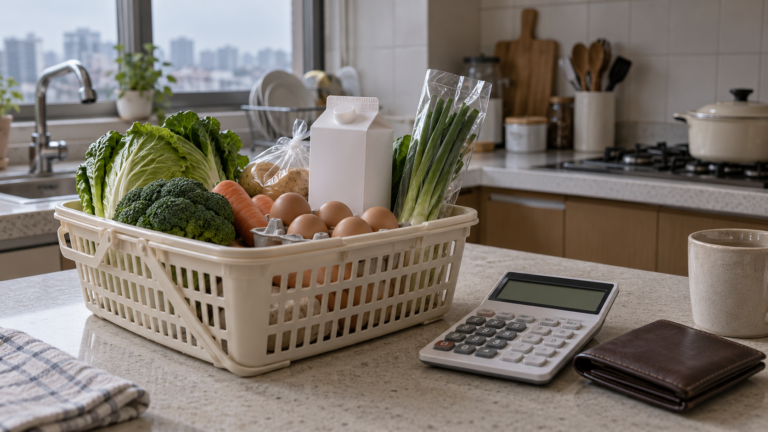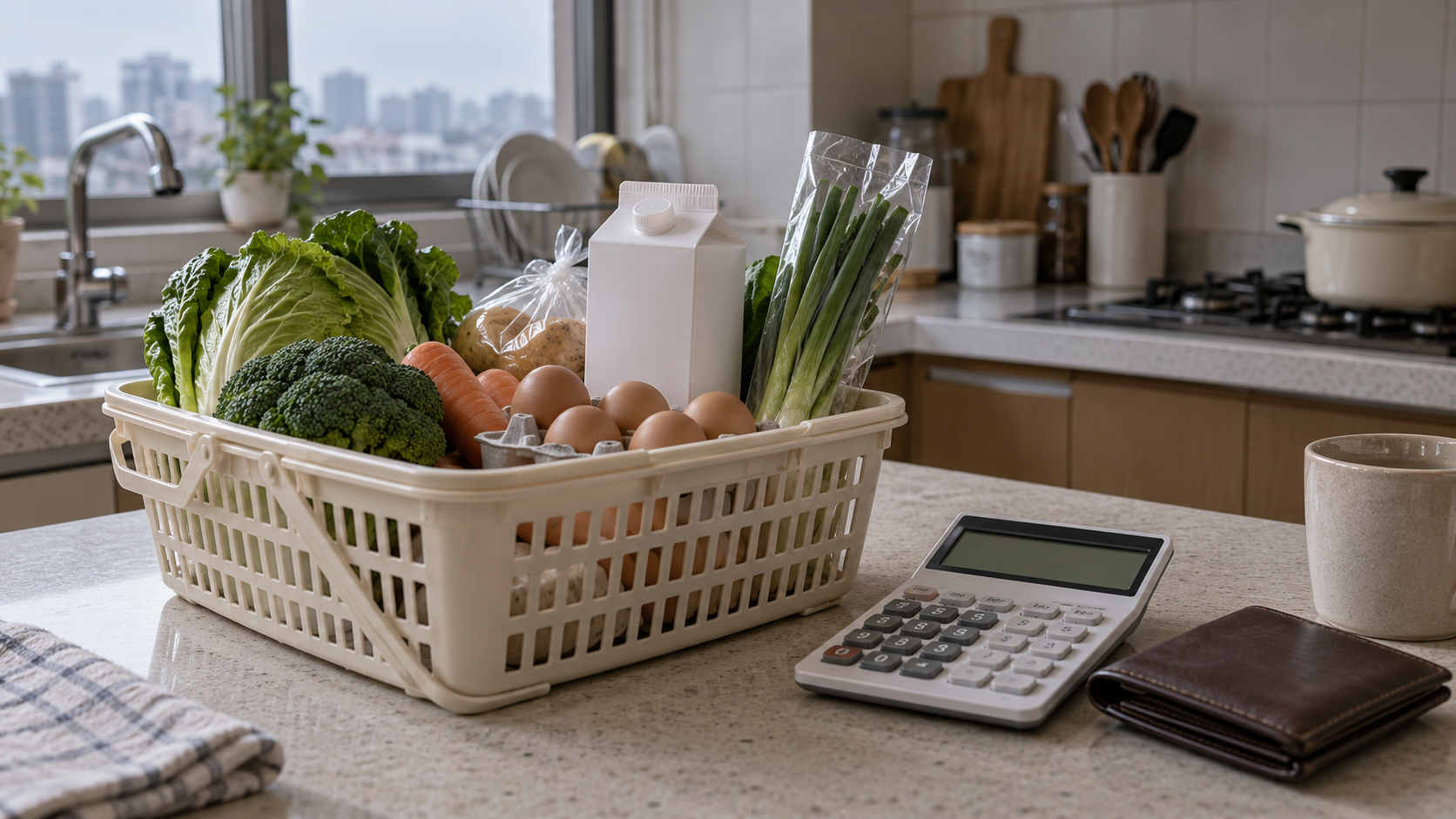
AI-generated conceptual image; not a photograph of an actual event.
Reporting cutoff: October 22, 2026, 11:30 KST (UTC+9). Event, release and data periods are identified below.
You buy fewer groceries and pay roughly the same amount. A headline about easing inflation offers little comfort. The gap is understandable: a slower rate of increase is not a reversal of the accumulated price rise.
Three readings with different meanings
Korea’s September CPI release, published October 2, showed prices rising 2.9% from a year earlier, versus 3.1% in August. The decline of 0.2 percentage points is a change in the inflation rate. It does not mean the shopping basket became 0.2% cheaper.
The labor survey released September 30 reported July average monthly earnings of KRW4.316 million, up 2.5%, with real earnings down 0.3%. July wages and September inflation cover different months; subtracting the two growth rates would not produce a valid current real-wage estimate. An employee average is not an individual pay rise either.
An October 22 report at 9:52 a.m. KST said the Bank of Korea held its policy rate at 3.00%. A central-bank policy rate is not a household loan rate. Contract terms and repricing dates determine when borrowing costs change.
Interpretation: the prices you keep encountering
D’Acunto, Malmendier, Ospina and Weber’s 2021 study links grocery-price exposure and inflation expectations using U.S. consumer data. Frequently purchased items mattered to expectations. The finding cannot be converted into a numerical measure of Korean households’ current sentiment, but it helps frame why a personal basket differs from a national index.
The author’s interpretation is that repeated encounters with grocery bills can make them more salient than less frequent purchases. Yet financial pressure is not simply a cognitive error. Rent, food, dependents and debt create genuinely different budget exposures.
From household pressure to corporate margins
A food producer can report higher sales after raising prices while selling fewer units. Input costs, wages and promotions can still reduce margins. Retailers face changes in basket size and product mix as households trade down. Higher nominal revenue therefore does not by itself establish stronger consumer demand or greater shareholder cash generation.
For housing and durable goods, financing costs and monthly payments add another channel. Slower inflation may support expectations of rate stability, but weaker growth can simultaneously damage demand. If pay grows faster than prices and employment holds up, purchasing power can improve. One inflation release cannot choose between those outcomes.
A household-level check
Compare quantities as well as spending, and separate recurring bills from discretionary purchases. This distinguishes price changes from changes in what you bought. An investment plan also needs a cash allowance for essential expenses, so frustration about living costs does not become a reason to take more market risk than the household can carry.
Before you act
- Distinguish the price level from monthly and annual inflation rates.
- Match reference months before comparing wages and prices.
- Check essential-spending weights and loan repricing dates.
- Track corporate volumes, margins and cash flow alongside revenue.
Sources and dates
- 국가데이터처 / National Data Office, September CPI, 2026-10-02
- 고용노동부 / MOEL, August employment survey / July wages, 2026-09-30
- 이코노미스트 / Economist Korea, 2026-10-22 09:52 KST
- D’Acunto, Malmendier, Ospina & Weber, Journal of Political Economy, online 2021-03-19 / May 2021 issue
Editorial note: Psychology passages are the author’s interpretation; market channels and counter-scenarios are conditional analysis, not established explanations of any individual trade.
AI-generated conceptual image; not a photograph of an actual event.
Related analysis: Earlier reporting and valuation context
한국어 기사: 물가 상승률은 낮아졌다는데 왜 생활비는 그대로일까…월급과 금리까지 봐야 하는 이유
글쓴이 소개