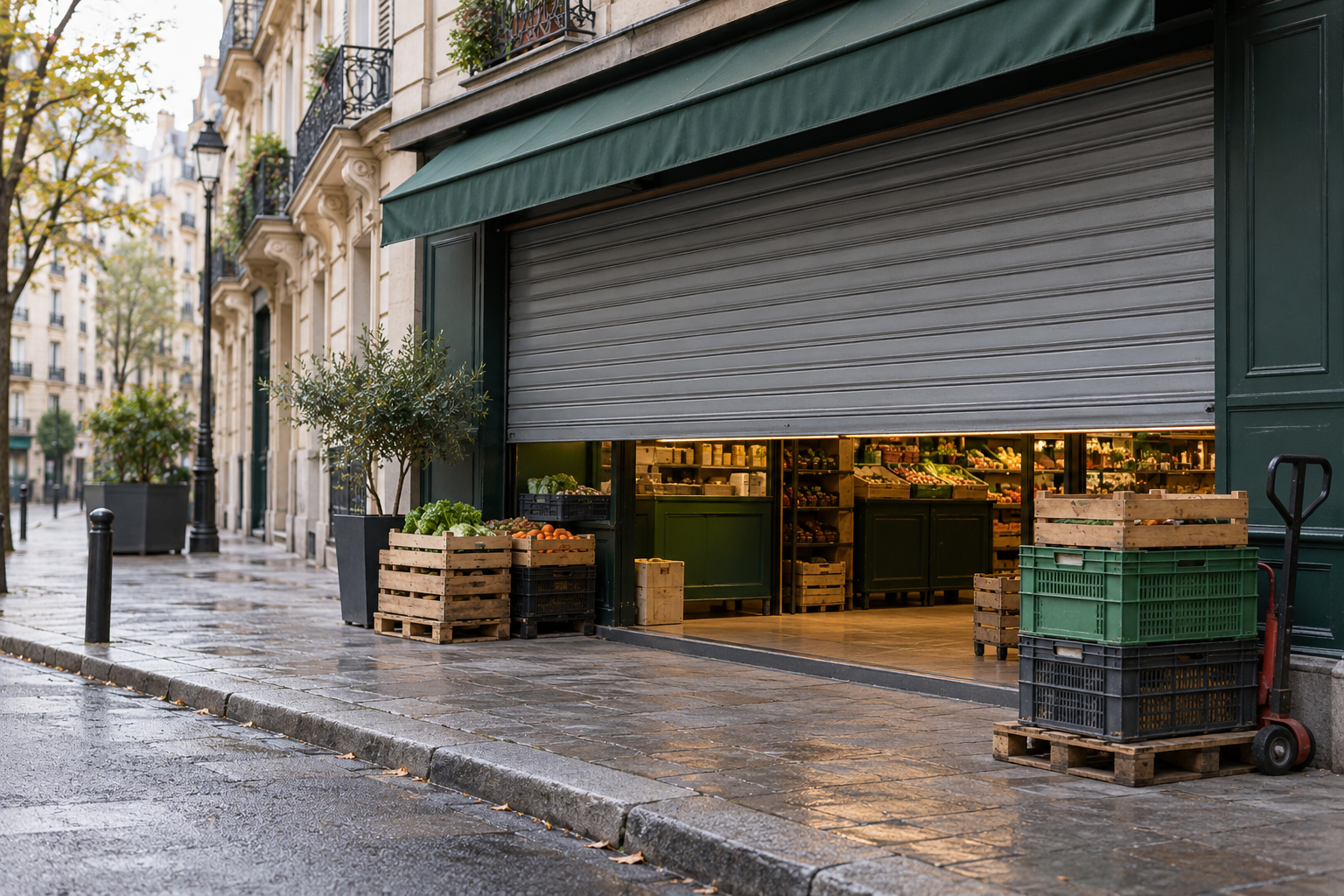
AI-generated conceptual image; not a photograph of an actual event.
Reporting cutoff: October 22, 2026, 11:30 KST (UTC+9). Event, release and data periods are identified below.
Footage of unrest abroad can make a diversified portfolio suddenly feel exposed. The useful question is not how alarming the images look. It is which businesses lose sales, incur costs or tie up cash—and for how long.
A company-level channel, not a country-wide assumption
In its October 20 third-quarter sales release, French retailer Carrefour reported like-for-like growth of 2.3% while cutting expected full-year recurring operating-margin improvement from 25 basis points to 0–15. A basis point is one-hundredth of a percentage point; these figures are margin guidance, not stock returns.
Carrefour also moved to stable-to-slight adjusted EPS growth and a slight decline in net free cash flow. The company cited weaker store traffic, opening restrictions and security and logistics costs. Reuters’ same-day coverage discussed estimated damage to earnings; estimates are not booked final losses. This article examines that October 20 disclosure rather than presenting it as an October 22 event.
Interpretation: vivid evidence can overwhelm relevant evidence
Tversky and Kahneman’s 1973 availability research concerns how readily recalled information enters judgment. Applied here, memorable images may encourage an investor to treat every French business as equally exposed. This is the author’s interpretation, not proof of what drove any share-price move.
Exposure differs with store locations, sales channels, insurance terms and recovery time. A dramatic scene cannot measure nationwide consumption, and a reassuring national label cannot rule out a material problem at one retailer.
From closed doors to cash generation
Reduced footfall can lower sales while rent and other fixed costs continue. Inventory losses, logistics diversions, security and repairs can add pressure. Even where insurance applies, deductibles and payment timing can separate an accounting recovery from a cash recovery. These are analytical channels, not a claim that Carrefour disclosed every item as a realized loss.
Carrefour, ticker CA on Euronext Paris, is used as an operating example; its reporting currency here is EUR. We provide no share-price quote or invented P/E. Liquidity calls for examining cash, debt maturities, lease payments and operating cash flow. Valuation separately asks what a post-recovery stream of earnings is worth at the purchase price.
A Korean investor needs another step before connecting this story to a Korean holding: actual French revenue, local operations or customer exposure. Mere presence in a broad European fund does not establish the size of the earnings effect.
The counter-case is recovery
Rapid reopening and resilient year-end spending could make the eventual impact smaller than feared. Prolonged restrictions could leave both weaker sales and higher costs. Company guidance remains conditional. Subsequent margins and cash flow—not repeated footage—will test the investment interpretation.
Before you act
- Measure the company’s actual regional revenue and operating exposure.
- Separate disclosed disruption from estimated future losses.
- Check insurance terms and cash-payment timing.
- Track margins and cash flow alongside sales growth.
Sources and dates
- Carrefour, Q3 sales release, 2026-10-20
- Reuters / Euronext, 2026-10-20
- Tversky & Kahneman, Cognitive Psychology 5(2), 1973
Editorial note: Psychology passages are the author’s interpretation; market channels and counter-scenarios are conditional analysis, not established explanations of any individual trade.
AI-generated conceptual image; not a photograph of an actual event.
Related analysis: Earlier reporting and valuation context
한국어 기사: 프랑스의 불안이 내 주식까지?…카르푸가 낮춘 전망에서 찾은 연결고리
글쓴이 소개