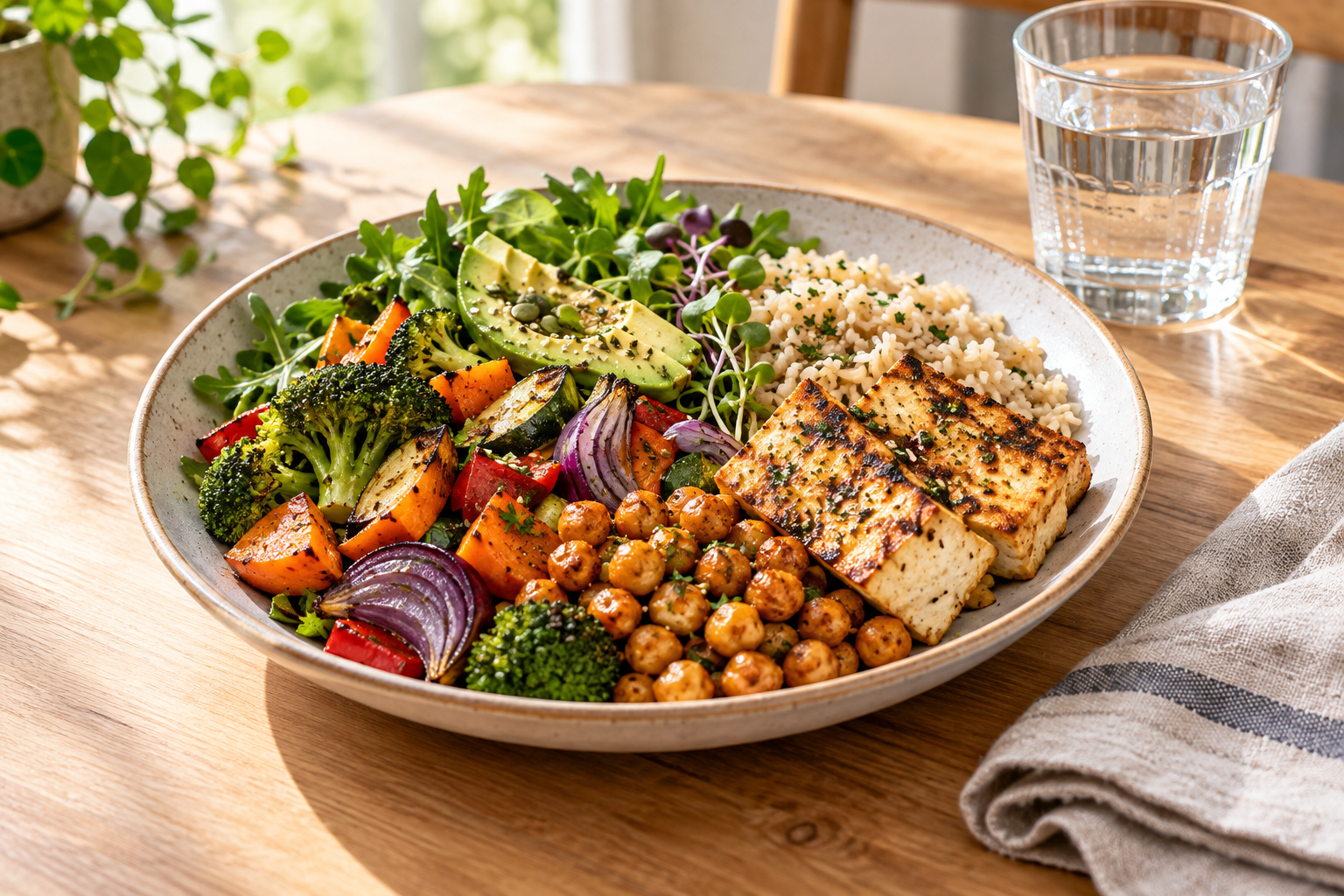
Sustainable weight management starts with routines you can repeat. Instead of banning whole food groups or chasing a rapid change on the scale, build a practical pattern around balanced meals, regular movement and adequate rest.
Start with a routine, not a deadline
The US Centers for Disease Control and Prevention (CDC) describes healthy weight loss as a lifestyle that includes eating patterns, physical activity, sleep and stress management. Whether weight loss is appropriate depends on your health and circumstances. Before changing everything, notice when you eat, which drinks you choose and how much you move. Pick one or two manageable actions.
1. Build a satisfying, varied plate
Include vegetables, whole grains and a protein food such as beans, tofu, eggs or fish. A simple meal could combine brown rice, tofu and cooked vegetables. Portions and preparation methods matter alongside food choices; no single “healthy” ingredient guarantees weight loss. Choose meals you enjoy and can prepare consistently.
2. Review everyday drinks
If sugary drinks are part of your routine, try replacing one with water or an unsweetened drink. This is a practical place to start without skipping meals. Keep the change specific: decide which drink you will swap and when. You do not need to make every choice perfect to build a useful habit.
3. Add walking and strength work gradually
WHO recommends 150–300 minutes of moderate aerobic activity per week, or an equivalent amount of vigorous activity, plus muscle-strengthening work on at least two days. These are general health recommendations, not a promise of weight loss. If you are inactive, begin with a short walk and increase activity gradually. Break up long periods of sitting and choose movement that fits your ability.
4. Give sleep a place in the plan
Schedule a consistent bedtime and make room for rest alongside meals and exercise. Notice whether late nights make your planned routines harder to follow. A short evening wind-down and preparing tomorrow’s lunch are examples of actions that can make the next day easier; use what suits your schedule.
5. Review progress beyond the scale
Ask whether meals are more regular, walks feel easier or your routine is more consistent. Treat an interrupted day as information: identify the obstacle and adjust the next step. Avoid trying to compensate by starving yourself or exercising excessively. The aim is a pattern you can return to.
A simple plan for the week ahead
Choose one unsweetened drink swap, add vegetables and a protein food to one daily meal, and take a ten-minute walk on days you can. Set a realistic bedtime and review the week on Sunday. This is a starter example rather than a complete nutrition or exercise prescription. Adapt it to your needs, access to food and physical ability.
This article provides general information for adults. Seek individualized advice before pursuing weight loss if you are pregnant or breastfeeding, have a chronic condition, take medication or have a history of an eating disorder. Children and teenagers need guidance appropriate to growth and development.
Sources
CDC: Steps for Losing Weight · CDC: Tips for Maintaining Healthy Weight · WHO: Physical activity. Accessed October 20, 2026.
글쓴이 소개